
SAR $7 Billion Railway Contract: Complete Guide to Saudi Arabia’s Mega Rail Project (2026)
Saudi Arabia is investing heavily in modern transport, and the SAR $7 Billion Railway Contract is a key part of that vision. The project supports the expansion of the national railway network and strengthens freight and passenger transport across the Kingdom. Led by Saudi Arabia Railways (SAR), the initiative aligns with Saudi Vision 2030 and the National Transport and Logistics Strategy. It aims to improve logistics, connect major cities, and increase the country’s role as a regional trade hub.
This mega railway project will expand rail corridors, improve connectivity between ports and industrial cities, and support long-term economic growth. It also creates new opportunities for businesses, investors, and engineering companies. In this guide, you’ll learn what the SAR $7 billion railway contract includes, why it matters, which organizations are involved, the planned routes, expected benefits, and the latest official updates.
SAR $7 Billion Railway Contract Explorer
Estimate contract allocation across railway project categories.
Total Contract
$7 Billion
Currency
USD
Purpose
Rail Infrastructure Planning
About SAR $7 Billion Railway Contract
This interactive tool helps estimate how portions of a large railway contract may be distributed across different infrastructure categories.
The calculations are illustrative and intended for educational and planning purposes. Actual contract allocations depend on official procurement documents, awarded packages, engineering scope, project phases, and contractor agreements.
What Is the SAR $7 Billion Railway Contract?
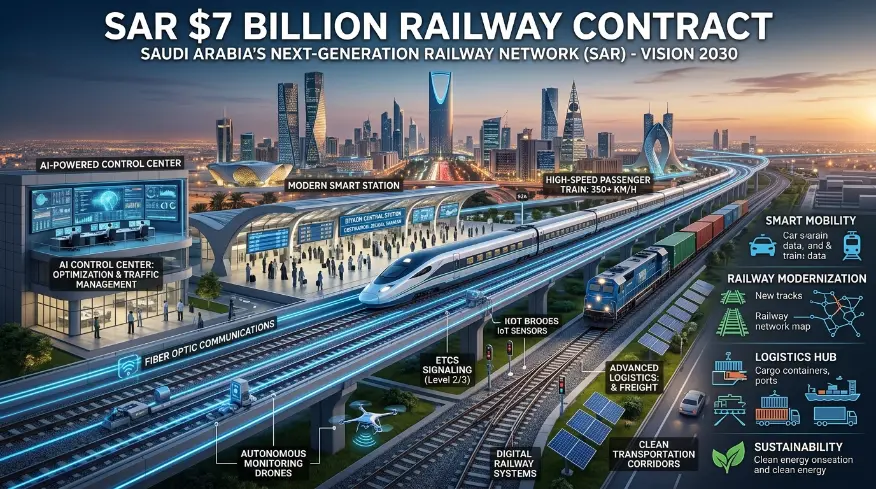
The SAR $7 billion railway contract is a major infrastructure investment that will expand Saudi Arabia’s national rail network. The project supports faster freight movement, better passenger connections, and stronger links between industrial cities, ports, and logistics hubs. It forms part of Saudi Arabia’s long-term plan to build a modern and integrated transportation system.
Saudi Arabia Railways (SAR) is leading the project in coordination with the Ministry of Transport and Logistics Services. The initiative also supports the goals of Saudi Vision 2030 and the National Transport and Logistics Strategy. Together, these programs aim to position Saudi Arabia as a global logistics hub connecting Asia, Europe, and Africa.
The project is valued at approximately US$7 billion. It includes new railway infrastructure, rail corridor upgrades, advanced signaling systems, and improved freight and passenger operations. A key element is the Saudi Landbridge Project, which will strengthen connections between the Red Sea and the Arabian Gulf. The network will also integrate with existing routes, including the North–South Railway and the East–West Railway, creating a more efficient national transport system.
The project has entered important planning and procurement stages. SAR has awarded and tendered several engineering and design contracts while preparing for the next phases of construction. These activities include route planning, technical studies, engineering design, and contractor selection before large-scale construction begins.
The main objective is to improve rail connectivity across the Kingdom. The investment will reduce freight transit times, increase cargo capacity, support passenger mobility, and lower pressure on road transport. It will also strengthen supply chains, attract private investment, create skilled jobs, and encourage sustainable transportation. By expanding its railway network, Saudi Arabia is building critical infrastructure that supports economic diversification and long-term national growth.
Why Is Saudi Arabia Investing $7 Billion in Railways?
Saudi Arabia is investing $7 billion in railways to build a stronger and more competitive economy. The railway sector plays a key role in Saudi Vision 2030, which aims to reduce reliance on oil and expand non-oil industries. Modern transport infrastructure supports trade, manufacturing, tourism, and industrial growth across the Kingdom.
A larger rail network will transform the country’s logistics sector. Faster rail services will move cargo more efficiently between ports, industrial cities, and distribution centers. This improves the national supply chain and lowers transportation costs for businesses. Better logistics also attract local and international investors.
Freight demand continues to grow as Saudi Arabia expands its mining, manufacturing, and export sectors. New rail corridors will carry more minerals, containers, and commercial goods. This reduces heavy truck traffic and creates a more reliable freight network.
Passenger demand is also increasing. Growing cities need faster, safer, and more comfortable travel options. Railway expansion will improve regional mobility and connect major destinations with modern transport services.
The investment strengthens regional connectivity by linking strategic cities, industrial zones, and logistics hubs. Better rail connections also improve access to seaports on the Red Sea and the Arabian Gulf. This supports international trade and reinforces Saudi Arabia’s position as a global logistics gateway.
The project also promotes sustainable transportation. Rail transport produces fewer emissions than road freight and helps reduce traffic congestion. Smart mobility solutions, advanced railway infrastructure, and digital technologies will improve efficiency while supporting long-term environmental goals. Together, these benefits make railway investment a cornerstone of Saudi Arabia’s economic transformation.
Key Details of the Railway Contract
The SAR $7 billion railway contract represents one of the Kingdom’s largest transport infrastructure investments. The project combines new railway construction with upgrades to existing rail corridors. Its goal is to create a faster, safer, and more connected national rail network.
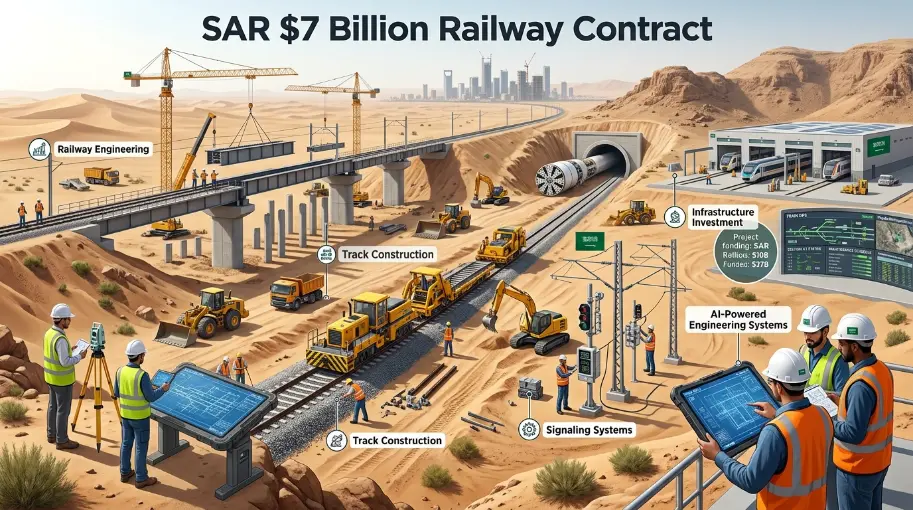
The contract covers multiple components across Saudi Arabia. These include new track construction, railway infrastructure upgrades, bridges, tunnels, freight facilities, passenger stations, maintenance depots, and modern signaling systems. The project also supports the expansion of the Saudi Landbridge Project, which will improve connections between the Red Sea and the Arabian Gulf.
The railway program includes hundreds of kilometers of new and upgraded rail lines. Final route lengths may vary as individual packages move through detailed engineering and procurement. The network will integrate with existing routes, including the North–South Railway and other strategic corridors.
Construction will take place in several phases. Early work focuses on feasibility studies, environmental assessments, detailed design, land preparation, and contractor selection. Later phases include major civil works, track installation, systems integration, testing, and operational readiness before commercial service begins.
Most construction packages are expected to be delivered through EPC contracts. These agreements combine engineering, procurement, and construction under a single contractor. This approach improves project coordination and delivery efficiency.
The project requires extensive railway engineering and civil engineering expertise. Engineers will design rail alignments, bridges, drainage systems, stations, and operational facilities. Specialists will also install advanced signaling, telecommunications, and digital control technologies to improve safety and network performance.
Although the complete construction schedule depends on individual contract awards, the railway program will be delivered in stages over the coming years. SAR continues to advance planning, procurement, and engineering activities as the project moves toward full implementation under Saudi Vision 2030.
Companies and Organizations Involved
Several government agencies and private companies play important roles in the SAR $7 billion railway contract. Each organization contributes to planning, funding, engineering, construction, and long-term operations.
Saudi Arabia Railways (SAR) leads the project. It manages railway planning, procurement, project delivery, and future operations. SAR also oversees network expansion and ensures the project meets national transport goals.
The Ministry of Transport and Logistics Services provides strategic direction. It aligns the railway program with Saudi Vision 2030 and the National Transport and Logistics Strategy. The ministry also supports policies that improve transport efficiency and logistics performance.
The Public Investment Fund (PIF) supports Saudi Arabia’s long-term infrastructure development. While funding structures vary by project, PIF helps accelerate strategic investments that strengthen the Kingdom’s economy and transport sector.
The project also relies on experienced EPC contractors, engineering consultants, and infrastructure developers. These specialists prepare detailed designs, conduct technical studies, manage construction, and install railway systems. Many large railway packages attract bids from international consortia that combine global engineering expertise with local construction capabilities. International partners also contribute advanced technologies, project management, digital railway systems, and engineering best practices. This collaboration helps deliver a modern, reliable, and future-ready railway network.

Railway Routes and Cities Covered
The SAR $7 billion railway contract focuses on expanding strategic rail corridors that connect major cities, industrial centers, ports, and logistics hubs. These routes support both passenger travel and freight transportation while strengthening Saudi Arabia’s position as a regional logistics gateway.
| Route | Primary Purpose |
| Riyadh–Dammam | Passenger and Freight Services |
| Riyadh–Jeddah | Saudi Landbridge Connection |
| Riyadh–Hail | Regional Development |
| Riyadh–Al Qassim | Passenger Connectivity |
| Riyadh–Al Jouf | Northern Expansion |
| Riyadh–Qurayyat | Cross-border Connectivity |
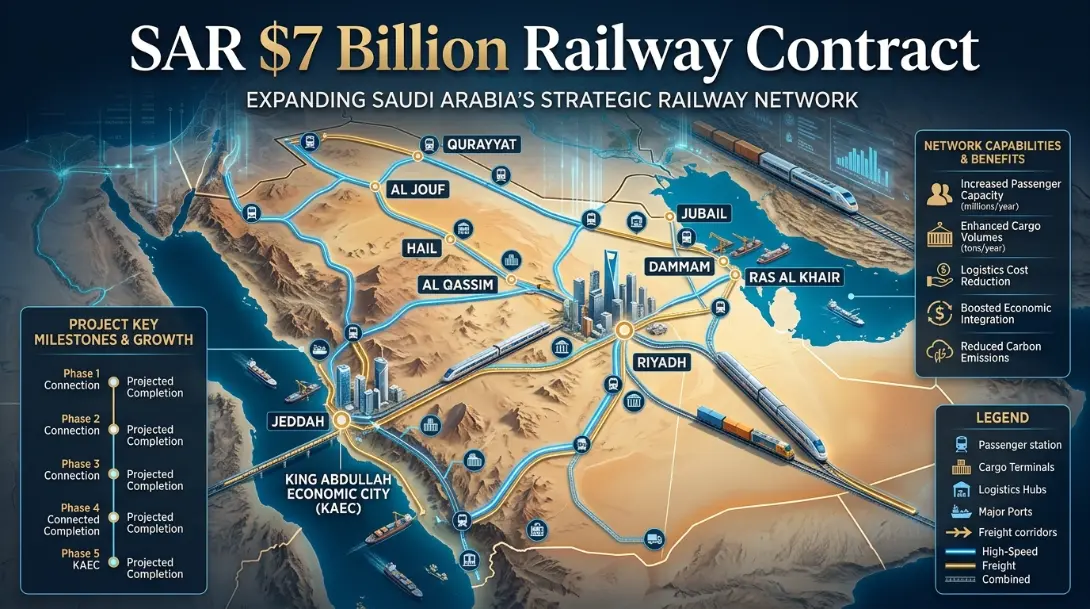
The Riyadh–Dammam corridor remains one of the Kingdom’s busiest rail routes. It supports daily passenger travel and efficient cargo movement between the capital and the Eastern Province.
The planned Riyadh–Jeddah connection forms the backbone of the Saudi Landbridge Project. This corridor will link the Red Sea with the Arabian Gulf, reducing freight transit times and improving national logistics.
Northern routes serving Hail, Al Qassim, Al Jouf, and Qurayyat will improve regional connectivity and support economic development outside major metropolitan areas. These corridors also strengthen links with industrial zones, mining regions, and future investment projects.
The expanded network will integrate with the existing North–South Railway and East–West Railway, creating a more connected national rail system. It will also improve access to key industrial and logistics locations, including Jubail, Ras Al Khair, and King Abdullah Economic City. Together, these routes will enhance freight efficiency, support passenger mobility, and strengthen Saudi Arabia’s growing transport network.
How Will the Project Improve Passenger and Freight Transport?
The SAR $7 billion railway contract will improve travel and freight movement across Saudi Arabia. The expanded rail network will make transportation faster, safer, and more reliable for passengers and businesses.
Passengers will benefit from shorter travel times between major cities. New railway routes will connect more destinations and improve access to growing regions. Modern stations will offer better waiting areas, improved accessibility, and enhanced passenger services. Digital platforms and smart ticketing systems will make booking and boarding easier. These upgrades will encourage more people to choose rail over road travel.
The project will also strengthen the Kingdom’s passenger railway network by increasing service capacity and improving operational reliability. Better rail connections support tourism, business travel, and daily commuting while reducing pressure on busy highways.
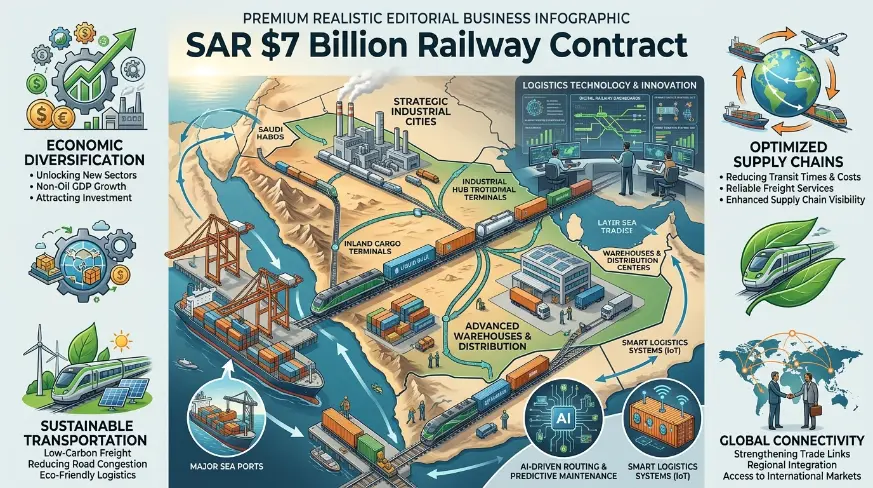
Freight transport will see even greater improvements. The expanded freight railway network will move larger volumes of cargo between ports, industrial cities, and logistics centers. Better connections with cargo terminals and dry ports will reduce handling times and improve delivery speed. Rail transport also provides a cost-effective option for moving minerals, containers, and manufactured goods across long distances.
Improved port connectivity will strengthen trade through major gateways on the Red Sea and the Arabian Gulf. Efficient intermodal transport will allow cargo to move smoothly between ships, trains, and trucks. This integrated approach reduces road congestion, lowers transport costs, and improves overall logistics efficiency. As a result, businesses can move goods faster while supporting Saudi Arabia’s ambition to become a leading global logistics hub.
Technologies Used in the SAR Railway Project
The SAR $7 billion railway project uses advanced technologies to improve safety, efficiency, and network performance. These systems help operate a modern railway that meets international standards and supports future growth.
One of the key technologies is the European Train Control System (ETCS). It monitors train movements, improves signaling accuracy, and increases operational safety. ETCS also allows trains to run more efficiently while reducing the risk of human error.
The project also supports a Digital Railway strategy. Digital platforms collect real-time data to improve traffic management, scheduling, and passenger information. A Smart Railway uses connected systems to optimize daily operations and improve service quality.
Artificial Intelligence (AI) analyzes operational data to support better decision-making. The Internet of Things (IoT) connects sensors installed on trains, tracks, and railway equipment. These sensors continuously monitor network conditions and identify potential issues before they affect operations.
Railway automation improves operational accuracy and reduces manual processes. Predictive maintenance uses AI and sensor data to detect equipment wear early, helping maintenance teams prevent unexpected failures and reduce service disruptions.
GIS technology supports route planning, asset management, and infrastructure monitoring. Fiber optic communications provide fast, secure data transmission between stations, control centers, and signaling systems. Together, these technologies create a safer, smarter, and more reliable railway network that supports Saudi Arabia’s long-term transportation goals under Vision 2030.
Economic Impact of the SAR $7 Billion Railway Contract
The SAR $7 billion railway contract will generate long-term economic benefits across Saudi Arabia. The project supports economic diversification by expanding industries beyond the oil sector and creating new opportunities for businesses and investors.
Large-scale railway construction will create thousands of direct and indirect jobs. Engineers, construction workers, project managers, and technology specialists will all play important roles during development. Local suppliers and service providers will also benefit from increased business activity.
The investment is expected to contribute to national GDP by improving transportation efficiency and supporting faster trade. Better rail connections reduce logistics costs and help businesses move goods more quickly across the Kingdom. These improvements strengthen the national supply chain and increase productivity.
Modern railway infrastructure also attracts foreign direct investment (FDI). International companies are more likely to invest in countries with reliable transport networks and strong logistics capabilities. This supports industrial growth, manufacturing expansion, and new business opportunities.
The project will also benefit tourism and real estate. Better passenger rail services improve access to major cities, cultural destinations, and emerging economic zones. Improved connectivity often increases demand for commercial, residential, and industrial developments near railway stations.
Significant capital expenditure and long-term infrastructure funding will strengthen Saudi Arabia’s transport sector for decades. Together, these investments support sustainable growth, improve global competitiveness, and help achieve the long-term objectives of Saudi Vision 2030.
Challenges and Future Outlook
The SAR $7 billion railway contract is a complex infrastructure program that requires careful planning and execution. Building new rail corridors across long distances presents engineering, environmental, and logistical challenges. Teams must complete land surveys, technical studies, and regulatory approvals before major construction begins.
Managing project costs is another priority. Material prices, labor availability, and supply chain disruptions can affect budgets and schedules. Strong project management helps reduce these risks and keeps construction on track.
Environmental protection also plays an important role. Engineers must minimize impacts on surrounding communities and natural habitats while following national regulations. Modern railway design supports sustainable transportation by reducing road congestion and lowering carbon emissions.
Large infrastructure projects may also face timeline risks due to weather, procurement, or technical issues. Despite these challenges, Saudi Arabia continues to invest in railway modernization and network expansion. Future phases could connect more cities, industrial zones, and logistics hubs, creating a smarter and more efficient railway system that supports long-term economic growth.
Frequently Asked Questions
1. What is the SAR $7 billion railway contract?
The SAR $7 billion railway contract is a major railway infrastructure program led by Saudi Arabia Railways (SAR). It aims to expand the national rail network and improve passenger and freight transportation.
2. Who announced the project?
Saudi Arabia Railways (SAR) announced and is managing the project with support from the Ministry of Transport and Logistics Services under Saudi Vision 2030.
3. Who will build the railway?
Construction will be carried out by qualified EPC contractors, engineering consultants, and international consortia selected through competitive procurement processes.
4. Which cities will benefit?
Major cities include Riyadh, Jeddah, Dammam, Hail, Al Qassim, Al Jouf, Qurayyat, Jubail, Ras Al Khair, and King Abdullah Economic City.
5. What routes are included?
The project supports strategic corridors such as Riyadh–Dammam, Riyadh–Jeddah, Riyadh–Hail, Riyadh–Al Qassim, Riyadh–Al Jouf, and Riyadh–Qurayyat.
6. What is the Landbridge Project?
The Landbridge Project is a strategic railway corridor that links the Red Sea with the Arabian Gulf. It improves freight movement between ports and logistics hubs.
7. How does the project support Saudi Vision 2030?
The project strengthens transport infrastructure, supports economic diversification, improves logistics, attracts investment, and enhances regional connectivity.
8. Will passenger services improve?
Yes. The expanded railway network will provide faster travel, better stations, improved accessibility, and more destinations for passengers.
9. Will freight capacity increase?
Yes. New rail corridors and upgraded infrastructure will increase cargo capacity, improve port connectivity, and strengthen the national supply chain.
10. When will construction begin?
Planning, engineering, and procurement activities are already underway. Construction timelines depend on individual contract packages and official project schedules.
11. When is the project expected to finish?
The railway program will be completed in phases. SAR will announce official completion dates as construction progresses.
12. Which technologies will be used?
The project includes ETCS signaling, Digital Railway systems, Smart Railway technologies, Artificial Intelligence (AI), the Internet of Things (IoT), predictive maintenance, GIS, railway automation, and fiber optic communications.
13. How much is the investment?
The total planned investment is approximately US$7 billion, making it one of Saudi Arabia’s largest railway infrastructure programs.
14. What economic benefits are expected?
The project will create jobs, strengthen GDP growth, attract foreign direct investment (FDI), improve logistics efficiency, support manufacturing, and encourage sustainable economic development.
15. Where can I find official updates?
Official project announcements and verified updates are available from Saudi Arabia Railways (SAR), the Ministry of Transport and Logistics Services, and official Saudi government channels related to Saudi Vision 2030.
Conclusion
The SAR $7 billion railway contract represents a major step toward building a faster, smarter, and more connected transportation network in Saudi Arabia. The investment will expand railway infrastructure, improve passenger services, increase freight capacity, and strengthen links between ports, industrial cities, and logistics hubs. These improvements support economic diversification, attract investment, and enhance the Kingdom’s position as a global trade and logistics center.
As the project progresses, it will create new jobs, improve supply chain efficiency, and encourage sustainable transportation through modern railway technologies. It also reflects Saudi Arabia’s long-term commitment to infrastructure development under Saudi Vision 2030.
Because this is a multi-phase program, new milestones, contract awards, and construction updates will continue over the coming years. For the most accurate and up-to-date information, follow announcements from Saudi Arabia Railways (SAR), the Ministry of Transport and Logistics Services, and other official Saudi government sources. Relying on these trusted channels ensures you receive verified information as the project moves forward.